

ketteCrew Spotlight with Greg Ladd
.png)

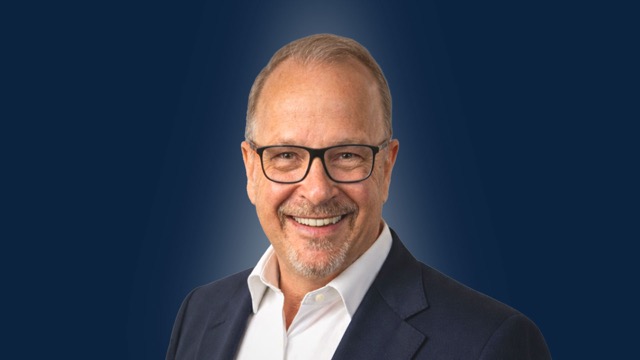
When you spend time with supply chain leaders today, one theme comes up again and again: pressure. Pressure to respond faster to disruption, pressure to protect revenue, and pressure to modernize planning capabilities without creating new operational risk. The expectations placed on supply chain teams have never been higher, and the path forward is not always obvious.
That is why I was excited to sit down with Greg Ladd, ketteQ’s VP of Strategic Accounts, for the next edition of our ketteCrew Spotlight series. Greg has spent years working closely with large enterprises as they navigate complex planning environments, modernization initiatives, and the competing priorities that come with running global supply chains. His perspective is shaped by countless conversations with executives trying to balance innovation with operational reality.
At ketteQ, Greg works at the intersection of strategy and execution, helping organizations evolve their suppy chain planning capabilities while protecting the systems and processes that keep their businesses running. In our conversation, he shares what he is hearing from supply chain leaders today, the misconceptions around AI in planning, and how companies can use agents to unlock new value and maximize ROI without creating disruption.
Here is our conversation:
Q: Tell us about your role at ketteQ. What does a typical week look like for you?
My role at ketteQ centers on partnering with organizations navigating complex supply chain challenges. I work with enterprise leaders to assess their planning capabilities and identify opportunities where modernization can deliver measurable financial and operational impact.
A typical week involves engaging with prospective clients to understand their planning maturity, advancing strategic conversations with existing accounts, and collaborating with our partner ecosystem to drive integrated solutions. The focus is less on transactions and more on building long-term relationships with organizations committed to evolving their supply chain planning in ways that align with their broader business objectives.
Q: How did you find your way to ketteQ, and what made you say, “This is where I want to be”?
My decision to join ketteQ was driven by the convergence of trusted relationships and a shared strategic vision. I have a long-standing professional history with our CRO, Bob More, built on a foundation of mutual trust and successful collaboration. Additionally, the opportunity to reunite with former colleagues like Keith Hamel, whom I worked with extensively at Kinaxis, provided immediate continuity in our approach to supply chain challenges.
Beyond the team dynamics, my prior engagement with our CEO, Mike Landry, within the Supply Chain ecosystem gave me deep insight into the leadership's philosophy. Ultimately, the decision came down to the caliber of the people and the clarity of the mission. Building an organization with leaders whose judgment and integrity I already know creates an environment where we can focus entirely on delivering value to our clients.

Q: What are the most common challenges supply chain leaders are wrestling with right now?
The fundamental issues we face haven't really changed, but the environment around them has grown significantly more complex. We are operating in a landscape defined by geopolitical instability and constant disruption, all while facing intense pressure from the business to respond faster and make sharper decisions.
What makes this particularly difficult is that many organizations are still anchored by legacy planning systems that are deeply woven into their daily operations. Swapping these out entirely is rarely a simple choice. It is expensive, risky, and often too disruptive to justify. This creates a frustrating gap between the urgent need for modern capabilities and the reality of the technology teams are actually using.
My own experience suggests that the most successful leaders aren't looking to rip and replace their entire infrastructure. Instead, they are seeking a way to bridge that gap. They want to layer intelligent, adaptive capabilities on top of their existing investments so they can start leveraging AI without destabilizing the systems that keep their business running. It is about finding a practical path forward that respects the work they have already done while opening the door to the future.
Q: Strategic accounts involve multiple stakeholders across supply chain, IT, finance, sales, and more. How do you align them around a single planning vision?
In many ways, the fundamental challenges remain consistent, but the complexity has intensified exponentially. Supply chains are currently navigating a hyper-volatile landscape defined by geopolitical fragmentation, persistent disruption, and heightened scrutiny from the C-suite regarding resilience and efficiency. The mandate for leaders has shifted from simple optimization to rapid, high-stakes decision-making under uncertainty.
However, a significant structural tension exists. While the need for advanced, adaptive planning is urgent, the reality for most enterprises is a deep reliance on legacy systems that are too critical to replace but too rigid to support modern AI-driven workflows. A 'rip-and-replace' strategy is often financially prohibitive and operationally dangerous, creating a capability gap where the need for innovation outpaces the ability to execute it safely.
The strategic imperative, therefore, is not necessarily to discard existing infrastructure, but to bridge this gap through augmentation. The most effective path forward involves layering intelligent, agentic capabilities on top of established systems. This approach allows organizations to unlock immediate value from AI such as real-time simulation and autonomous scenario planning; without incurring the massive risk and downtime associated with a full system migration. It transforms the conversation from 'replacing the foundation' to 'evolving the intelligence'.
Q: Do you see a common pattern with what’s not working for companies?
In my experience, the most common pattern isn't a single broken process, but rather a series of invisible gaps that slowly put revenue at risk. I see these blind spots everywhere—whether it's a disconnect between demand signals and actual supply, or capacity constraints in factories and warehouses that go unnoticed until it's too late.
What I find fascinating is the turning point many leaders hit. For a long time, they managed these gaps reactively, but eventually, the volatility of the market makes it clear that traditional methods are no longer a viable strategy. That moment of realization of when the cost of inaction finally outweighs the fear of change is often what drives them to seek more integrated, proactive ways of planning. It’s less about buying a new tool and more about finally having the clarity to make decisions with confidence.

Q: Many leaders hear “AI in planning” and immediately form an opinion. What’s the biggest misconception you encounter?
I think the most common misunderstanding is viewing AI as something separate from the planning process itself. People tend to think of it as an add-on tool, something you pull out when you need extra analysis. But that's not where the real value lives.
The meaningful work happens when AI becomes part of how planning decisions actually get made. When it's woven into the workflow, it helps teams spot blind spots they might miss, run simulations across multiple scenarios, and surface recommendations in real time. It stops being a novelty and starts being part of the daily rhythm.
What I've found is that the organizations getting the most out of AI are the ones treating it as a natural extension of their planning practice, not a separate initiative.
Q: Modernization can feel risky. How do you help organizations evolve without creating operational disruptions?
Any meaningful change starts with genuine commitment from leadership. I have found that most companies arrive at this conversation when external pressures—whether financial, operational, or market-driven—make it clear that the status quo is no longer viable. That moment of clarity is often when they begin seriously considering modernization.
The approach I take is deliberate and measured. Rather than pushing for sweeping transformation, I focus on understanding where the organization is today and what they need to protect while moving forward. We work alongside teams as partners, introducing new capabilities gradually so they can build confidence at each stage. This allows companies to evolve their planning processes and incorporate AI-driven tools in a way that feels grounded and sustainable.
For me, it is about respecting the work that has already been done while creating space for what comes next. Disruption rarely serves anyone well. A thoughtful, step-by-step path lets organizations modernize without losing the stability their teams depend on.
Q: In your view, when does it make sense to enhance existing systems, and when is it time to rethink the foundation entirely?
For me, this decision usually hinges on a honest assessment of where the business stands right now. We are constantly juggling supply chain improvements against other massive undertakings like acquisitions or broad digital transformations. Even when the challenges in our planning are obvious, the real test is whether they have risen high enough to demand the budget and attention they need.
I have found that the tipping point arrives when the risk to revenue and performance becomes impossible to overlook. At that stage, the conversation naturally shifts. Some teams find they can get what they need by layering new capabilities onto their current systems, while others feel the weight of their legacy infrastructure and know it is time to build something new. Ultimately, it comes down to having a shared clarity among our leaders that the moment to move has finally come.
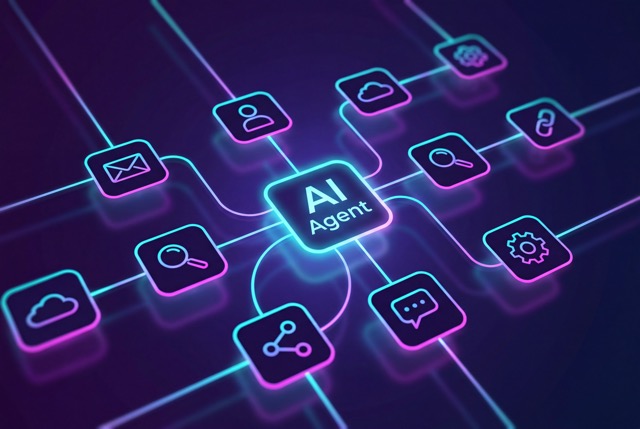
Q: “Agent-led planning” is a new concept for many executives. How do you explain Intelligent Planning Agents in a way that resonates with the C-suite?
I tend to start with honesty. Most executives have already invested significant resources in their current planning systems, and asking them to start over is neither realistic nor necessary. My focus is on showing how AI can work alongside what they already have.
Intelligent Planning Agents are essentially a way to layer new capabilities on top of existing infrastructure. They help teams simulate more scenarios, spot risks earlier, and move faster on decisions without changing the foundation their teams depend on daily. For a C-suite audience, the message is straightforward: you can modernize without destabilizing. You get the benefits of AI while protecting the investments and processes that keep the business running.
Q: What advice would you give an executive who knows they need to modernize, but is hesitant to replace their existing planning system?
I hear this concern often. The hesitation is rarely about the software itself. It is about what comes with it. Process changes. Training requirements. The risk of disrupting operations that are already running.
In my experience, the most productive conversations start by acknowledging those concerns rather than dismissing them. Change is costly, and leaders are right to weigh the tradeoffs carefully.
What I have found helpful is shifting the focus from the cost of change to the cost of inaction. When revenue exposure or performance gaps become impossible to ignore, the question naturally evolves. It becomes less about whether to change and more about how to change wisely.
My advice is to look for ways to modernize incrementally. You do not need to rip out everything at once. There are approaches that let you layer new capabilities on top of what already works. This reduces risk while still moving toward the outcomes you need.
At the end of the day, it is about finding a path that protects the business while opening the door to improvement. That balance is what makes modernization sustainable.
Q: When you walk into an executive conversation, what usually isn’t being said out loud, but should be?
What often goes unsaid is the difficulty of building genuine support inside the organization. A leader might personally understand the need for change, but translating that into organizational momentum is another matter entirely.
I've found that progress starts when you connect the work to outcomes people already care about. When modernization efforts tie back to revenue protection, operational stability, or strategic goals that executives are measured on, the conversation shifts. Suddenly it is not about convincing people to adopt new technology. It is about solving problems they are already accountable for.
That alignment is what turns hesitation into movement.
Q: What do you like to do outside of work?
Travel remains a consistent priority for me. I seek out destinations where I can immerse myself in different cultures and perspectives. Alongside that, I have maintained a long-standing interest in language study. I am conversational in Spanish and have recently begun learning Italian. Both pursuits keep me curious and connected to the world beyond my daily work.
Destination fly fishing is another meaningful pursuit. Whether on saltwater coasts or mountain rivers, I find myself drawn to places like Montana, Jackson Hole, and Belize. These experiences offer more than recreation. They provide space to reflect, reset, and appreciate the people and landscapes encountered along the way.

Q: What excites you most about where ketteQ is headed?
I believe we are at an inflection point. Organizations have moved past the initial curiosity phase around AI and are now focused on how to integrate it meaningfully into their daily operations. The question is no longer whether to adopt AI, but how to do so in a way that delivers real business value without unnecessary risk.
What draws me to ketteQ is the philosophy behind our work. We recognize that most companies have invested heavily in their existing planning infrastructure. Rather than asking them to start over, we focus on extending and enhancing what they already have. This approach respects the time and resources organizations have already committed while opening doors to more advanced capabilities.
For me, the most rewarding part is seeing clients gain clarity on their planning challenges and then having a realistic path forward. It is not about selling a vision of perfect automation. It is about helping teams make better decisions today while they continue to build toward tomorrow.
Reflexiones finales
Talking with Greg highlights just how much pressure supply chain leaders are under today. The challenges are not entirely new, but the stakes are higher. Volatility, complexity, and the need for faster decisions are pushing organizations to rethink how their planning environments support the business.
Greg’s perspective reinforces an important idea: modernization does not have to mean disruption. For many companies, the real opportunity is evolving what they already have and introducing AI-driven planning capabilities in a practical, manageable way.
We are grateful to have Greg as part of the ketteCrew and look forward to sharing more conversations with the people helping shape the future of adaptive supply chain planning.
Curious about the principles that shape how we build, deploy, and support adaptive planning? Visit our About Page to learn more about ketteQ’s mission, core values, and the team behind the technology.
Sobre el autor
Artículos relacionados

ketteCrew Spotlight: Embracing the Next Era of Planning with Ken Wardlaw
ketteCrew Spotlight: Embracing the Next Era of Planning with Ken Wardlaw