%20Medium.jpeg)

Human-Guided AI: The Operating Model for Modern Supply Chain Planning
.png)

Across this series, one idea has become clear: the future of supply chain planning is not defined by how much decision-making is handed over to machines. It is defined by how effectively intelligent systems and human judgment work together.
AI agents are already capable of generating insights, evaluating scenarios, and recommending actions. The real question is how organizations structure those capabilities in a way that improves performance without introducing unnecessary risk. This is where a new operating model is emerging: human-guided AI.
From Tools to Better Decisions
Most conversations about AI focus on tools. What can they automate? How much data can they process? How quickly can they generate recommendations?
But AI is more than a new technology layer. It changes how decisions are made.
Traditional supply chain planning has largely been episodic. Forecasts are generated, plans are reviewed, and adjustments are made when disruptions occur. Human-guided AI introduces a different model. Intelligent agents continuously monitor changing conditions, evaluate alternatives, and surface emerging risks before they become operational issues.
This creates a constant flow of insight. Yet insight alone does not create value. The advantage comes from combining machine-generated intelligence with human expertise and business judgment.
From Answers to Understanding
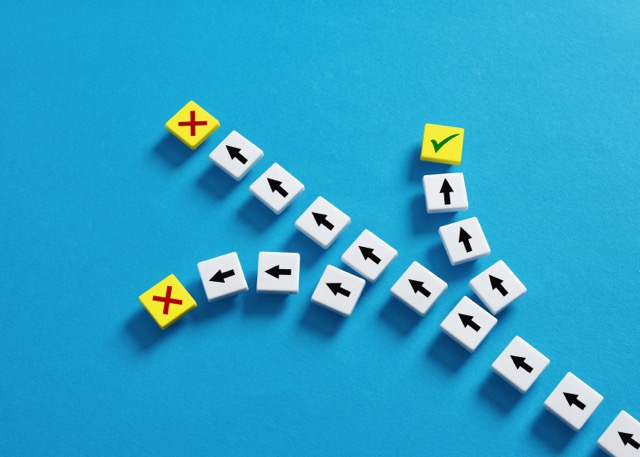
Traditional planning systems are often designed to produce a single answer: a forecast, a plan, or a recommendation. In today's environment, that approach is increasingly limited. Supply chains operate in conditions where uncertainty is constant, and outcomes can change quickly.
Human-guided AI shifts the focus from finding the "right" answer to understanding a range of possibilities. Instead of asking what will happen, leaders can explore what could happen and what actions might produce the best outcome.
Intelligent agents make this possible by evaluating thousands of scenarios and identifying patterns that would be difficult for people to uncover manually. They provide greater visibility into risks, opportunities, and tradeoffs. But they do not decide which path the business should take.
That responsibility remains with people.
This balance allows organizations to move faster without sacrificing control.
The Evolving Role of Planners
As intelligent systems take on more analytical work, the role of planners begins to evolve.
Rather than spending time gathering data, managing spreadsheets, or adjusting parameters, planners can focus on higher-value activities. They become decision architects who define objectives, interpret outcomes, and guide the business through complex tradeoffs.
The same shift applies to executive teams. Instead of reviewing static plans, leaders gain visibility into multiple potential outcomes and the factors influencing them. Decision-making becomes more proactive, strategic, and informed.
This is not about replacing human expertise. It is about elevating it.

Accountability Still Matters
Supply chain decisions carry real business consequences. Inventory levels affect working capital. Service levels impact revenue and customer experience. Procurement decisions influence costs and margins.
As AI becomes more embedded in planning processes, accountability becomes even more important.
Human-guided AI preserves accountability by keeping people responsible for goals, constraints, and final decisions. Intelligent agents generate insights and explore possibilities, but business leaders remain responsible for determining the best course of action.
This creates a planning environment where organizations can scale decision-making while maintaining governance, transparency, and trust.
From Reactive to Adaptive
Perhaps the most important advantage of human-guided AI is its ability to help organizations become more adaptive.
Traditional planning is often reactive. A disruption occurs, and the organization responds after the fact.
Human-guided AI enables a different approach. Because intelligent agents are continuously evaluating alternative scenarios, potential disruptions can be identified earlier. Leaders gain visibility into how changing conditions may affect performance before those impacts are fully realized.
This allows teams to evaluate options sooner, respond with greater confidence, and make decisions based on a broader understanding of potential outcomes.
Over time, planning becomes less about reacting to events and more about anticipating them.

El futuro de la planificación de la cadena de suministro
This operating model is already taking shape. At ketteQ, digital agents powered by the PolymatiQ™ agentic AI engine continuously evaluate demand, supply, and inventory scenarios across a wide range of conditions. The objective is not to automate decisions in isolation. It is to provide greater visibility, expand optionality, and support better decision-making.
As AI capabilities continue to advance, intelligent agents will become more powerful and more integrated across enterprise systems. But the defining characteristics of high-performing supply chains will not be autonomy alone.
It will be the ability to combine a computational scale with human judgment.
The organizations that succeed will be those that use AI to strengthen decision-making, not replace it. They will move faster because they can evaluate more possibilities. They will operate with greater confidence because they understand uncertainty more clearly. And they will build more adaptive supply chains because people remain at the center of the decisions that matter most.
That is the promise of human-guided AI.
Más información
- Part 1: The Autonomy Illusion: Why Fully Autonomous Supply Chains Aren’t the Endgame
- Part 2: 4 Principles for Designing Human-Guided AI in Supply Chain Planning
Download the full guide to see how leading organizations are building more adaptive, accountable, and high-performing supply chains.
Sobre el autor
Artículos relacionados

ketteCrew Spotlight: Embracing the Next Era of Planning with Ken Wardlaw
ketteCrew Spotlight: Embracing the Next Era of Planning with Ken Wardlaw